In memoriam Lorenzo Stella
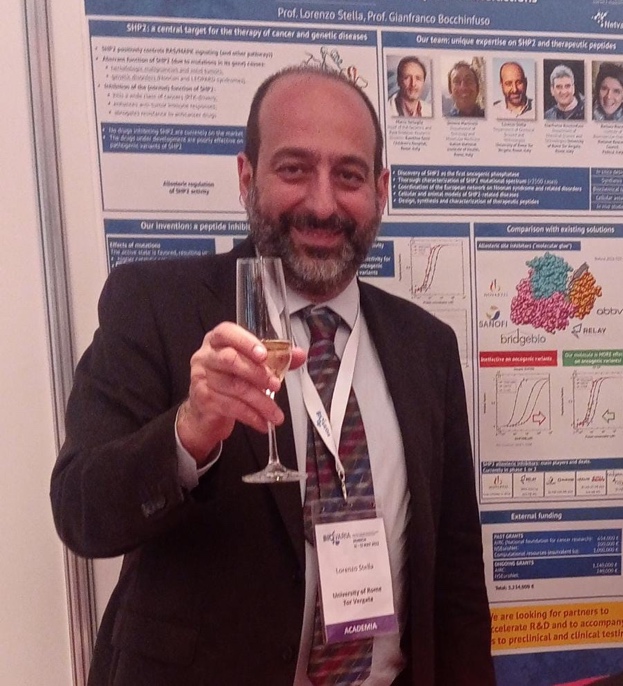
The first edition of this workshop, held in Florence in 2024, was strongly promoted by Lorenzo Stella. Sadly, Lorenzo was unable to attend that workshop, as a severe illness had already left him greatly disabled. That same illness took him away on August 24, 2025.
Lorenzo Stella, born in Rome in 1968, was a Full Professor of Physical Chemistry at the Department of Chemical Science and Technologies, Tor Vergata University of Rome, which he joined in 1997 after graduating in Physics at the La Sapienza University of Rome (advisor Prof. G. Careri) and gaining international research experience at the University of Illinois at Urbana-Champaign, U.S.A. (advisor Prof. E. Gratton) and in the Laboratorium für Biochemie of the ETH Zürich.
Lorenzo was firmly convinced that collaboration and dialogue among researchers are the key to the advancement of science and he really loved taking part in and promoting conferences and workshops. He was also an active member of several scientific societies, including the Biophysical Society, being part of the Editorial Board of the Biophysical Journal (in the “Membranes” section), the Italian Peptide Society, which he co-founded and was also Secretary of, and the Italian Society for Pure and Applied Biophysics (SIBPA) as a member of the steering committee.
His choice to promote this workshop reflected the very essence of his scientific career, in which he combined spectroscopic techniques and computational methods with rare mastery, particularly fluorescence spectroscopy and molecular dynamics simulations. In the later stages of his career, he focused increasingly on peptides with therapeutic potential, including antimicrobial peptides to counter drug resistance and peptides interacting with proteins involved in carcinogenesis.
His absence leaves an immense void for all who knew him, both professionally and personally. We all owe him gratitude for his profound moral integrity, intellectual depth, and creativity. His legacy, rooted in the fundamental importance of bridging the experimental and computational worlds, will endure through all future editions of this workshop.